Simple, spiky, sweet, tangy, mouthwatering. Goes with anything. Feeds 2
Half a cucumber
4 tbsp vinegar
2 tbsp caster sugar
Pinch of salt
Slice the cucumber as thin as poss, use a mandolin if you have one
In a cup, mix together the vinegar, sugar and salt. Stir until dissolved
Pour over the cucumber slices and mix through. Leave for 5 mins before serving, but no more than half an hour
If you’re making this to go with SE Asian food, use rice vinegar and garnish with sliced red chilli. If it’s Eastern European, use white wine vinegar, add a load of freshly ground black pepper or fresh chopped dill. If you’re just eating it with a pile of barbecued sausages, you can keep it plain!
Mix together flour, brown sugars, butter and cinnamon, rubbing the butter in with your fingertips until the mixture resembles breadcrumbs
Sprinkle the caster sugar and lemon juice over the sliced apple and mix together. Place the sugary apple in a wide, ovenproof dish, evenly distributed
Spread over the crumble topping evenly. Press down gently with your fingers
Bake for an hour. Maybe pop a baking tray on the shelf below just in case there are any small eruptions!
Cool for 10 mins before serving with a scoop of vanilla ice cream
You can add fruit such as cooked rhubarb or strawberries (with a sprinkle of flour to absorb the liquid). Or make it with peaches or apricots, and mix some flaked almonds and crushed amaretti biscuits into the crumble topping.
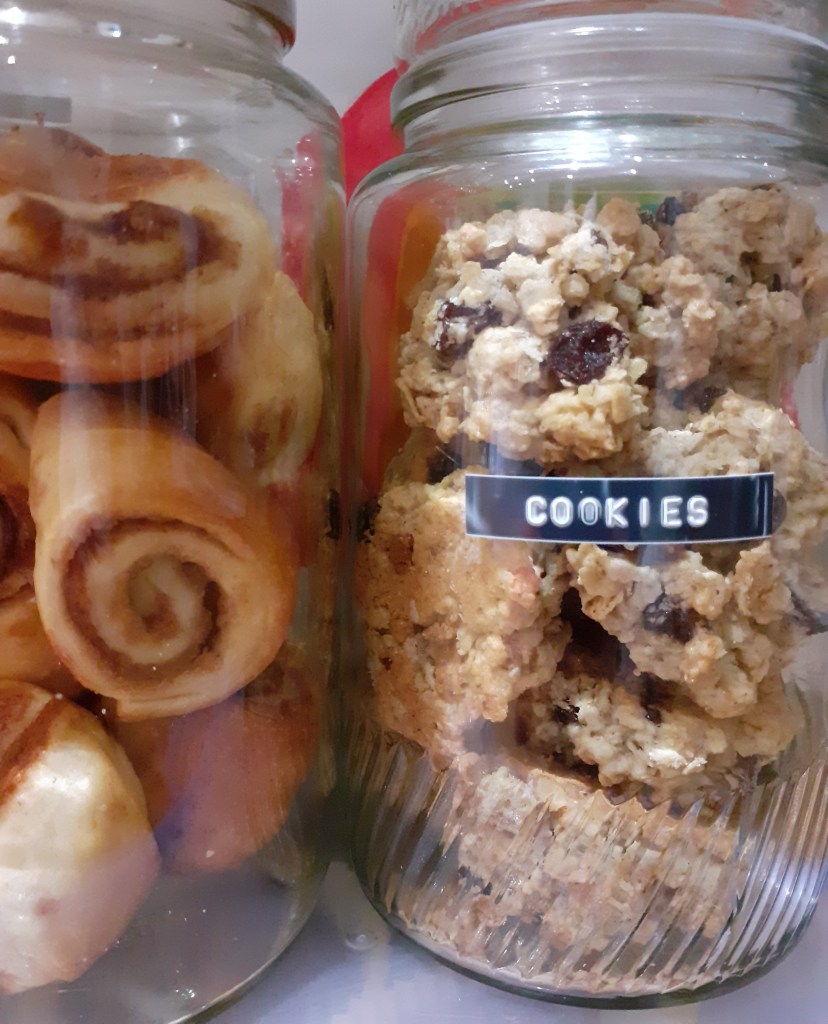
Nibbly, nubbly, raisiny, oaty and wholesome little craggy cookies. Makes 24.
100g raisins
150ml vegetable oil
200g golden caster sugar
1 large egg, beaten
1 tsp ground cinnamon
1 tsp vanilla extract
140g plain flour
¼ tsp bicarbonate of soda
300g oats
Heat oven to 160C fan (180C) and line 2 baking trays
Pour 50ml of boiling water over the raisins and leave to soak for 20 mins until plump. Drain, reserving the liquid
In a large bowl, whisk together the oil and sugar. Gradually beat in the egg, then the reserved water from the raisins, the cinnamon and vanilla
Stir in the flour, bicarb, a pinch of salt, oats and raisins until well combined
Drop heaped tbsps of the cookie dough onto the baking trays, evenly spaced. They can be quite close together, this mixture doesn’t spread much when baked
The ultimate brunch. Also supper, lunch, I could argue breakfast too. This recipe makes 6-8 fat fritters. Pop some piquant salsa on the side, dollop on some crushed avocado, pop a poached egg on top or drizzle with sriracha. Or, of course, all of the above for ultimate delicousness.
Milk (enough to bring together as a thick batter, can add a couple tbsp sour cream instead)
Salt and pepper (add other spices to taste – maybe garlic powder, paprika, smoked paprika)
Veg oil
Just mix everything together briefly until well-combined but without over-beating it. Heat some veg oil in a large pan over a medium heat. Fry for about 4 mins a side until golden brown and cooked through. Keep warm in a low oven if you need to cook in batches. Enjoy!
My granddad used to call these hash because he was an innocent and that was the most addictive thing he could think of. I wouldn’t go as far as to say addictive, but I would place a substantial bet against anyone being able to eat just one of them. This is another family Christmas tradition, combining chewy, deeply orange flavoured, crystallised peel with deep, dark chocolate. They are genuinely sublime and much greater than the sum of their parts. AND they use a bit of the fruit which normally gets thrown away, so it’s a double-win.
I’m not going to lie, this is a slightly more complicated process than most of my recipes. It’s a labour of love. Not difficult at all, but there are quite a few steps (all though 3 of them are just ‘change the water’) and it takes at least a week. Also, one of your saucepans will be occupied for 4 days.
You need to spend a couple of weeks (depending on how many oranges you eat) beforehand peeling oranges carefully with a knife and collecting the peel in a box. You need at least 4-6 oranges-worth to make it worthwhile. You can also use grapefruit or lemons. Not satsumas or limes though, because the skin is too thin.
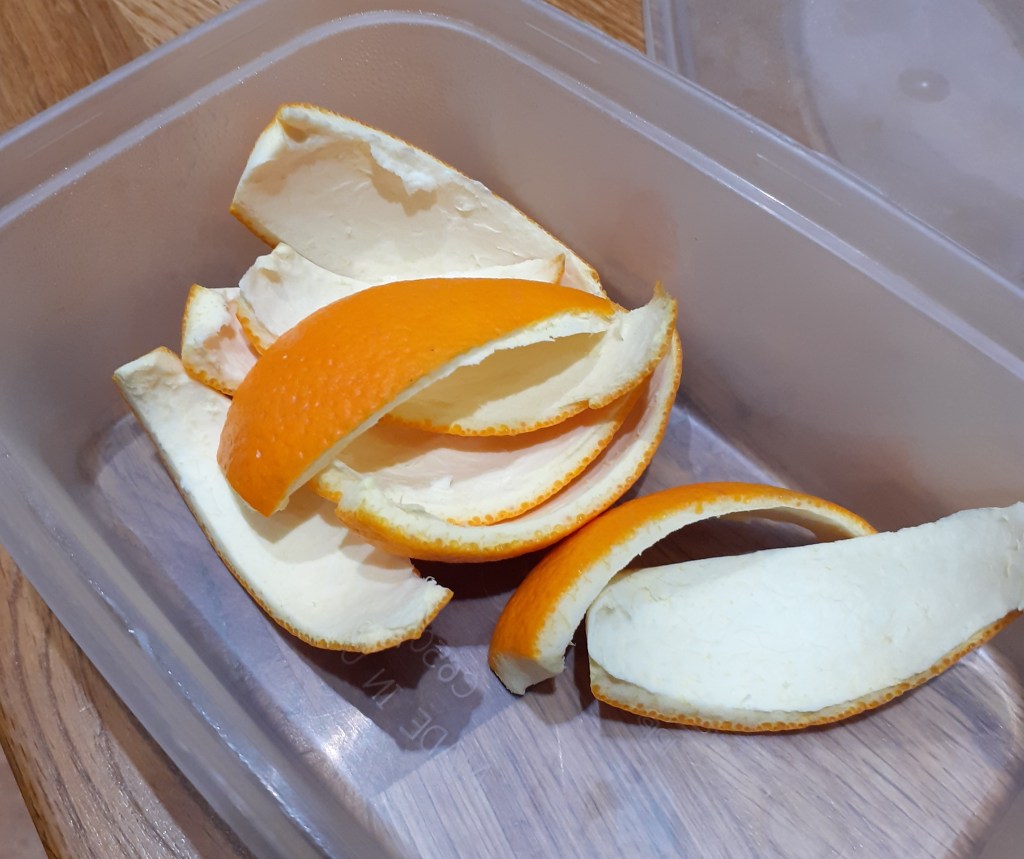
Before you start, the peel should be in pieces like the pic below. (I know, a picture, what a treat!)
Day 1: Cut the peel into long strips 1-2 cm at their widest point. Then slice off half the pith from each strip (so you’re cutting the top layer of the white bit off each piece). This is easiest if you hold the peel down flat on a chopping board with one hand, orange side down, and use a very sharp knife in the other hand to slice a thin strip of the pith off the top. (It’s ok if you go deeper by accident.) Then put the strips into a big bowl, cover generously with cold water, stick a plate or something on top so nothing falls in it and leave to soak for 24 hours
Day 2: Drain and change the water
Day 3: Drain and change the water
Day 4: Drain and put the wet peel into a saucepan. Cover with new cold water and bring to the boil. Drain and then weigh the peel. In a separate bowl, measure out the same weight of sugar as peel. Then, in a jug, measure out the same ml of water as grams of sugar. Put the sugar and water into the empty pan and heat until sugar is dissolved. Add the peel, stir in and leave to cool in the pan
Day 5: Bring to the boil, stirring gently, then leave to cool
Day 6: Bring to the boil, stirring gently, then leave to cool
Day 7: Bring to the boil very slowly, stirring occasionally, until the syrup begins to crystallise. Turn the heat down very low and stir gently and continuously until there’s no liquid left. Remove the crystallised peel (not using your fingers) to cool onto a lined baking sheet. Make sure they’re not touching or they’ll stick together
Day 8: Melt dark chocolate in a bowl. The chocolate can be as dark and as fancy as you like. Although I’m a big fan of a Dairy Milk button or two, you should not use milk chocolate here. Dip each piece of peel into the chocolate to cover the whole thing except for the tinest finger-hold at one end. Place, not touching, on a lined tray and leave to harden in the fridge
They will keep well in a tin or airtight container in a cool place for weeks if you can stop everyone in your life from hoovering them up before you put them away.
Sticky, gooey, ridiculously sweet. Will win you friends and influence people. Serves 6 generously
120g digestive biscuits (about 8 of them)
60g butter, melted
200g tinned Carnation caramel (annoyingly half a tin) or dulce de leche
2 bananas
150ml double cream
Chocolate shavings to decorate
If you don’t have caramel, you can cook a tin of condensed milk by placing it in a saucepan, fully covering the tin with water, bringing to the boil and simmering uncovered for 3 hours.You will probably need to keep topping the water up. Then remove from the pan and allow to cool completely before opening.So then it’s just a construction job.
You need a tin or serving dish and, if you want to serve it like a cheesecake, you’ll need a lined springform tin
Crush the digestives to crumbs and pour over the melted butter
Mix together and press into the bottom of the tin/dish
Leave on one side to cool and harden for at least 15 mins
Cut the bananas into rounds and whip the cream until thick but not stiff
Spread the caramel over the biscuit base, arrange the banana slices on top in an even layer and finish with a layer of whipped cream
Decorate with grated dark chocolate or cocoa powder
More Wagamama or Yo Sushi than authentic Japanese, but savoury and delicious nonetheless. For a quick dinner, use pre-made breaded chicken escalopes or goujons. Serve over rice, garnished with sesame seeds and sushi ginger, with a zingy salad on the side. Or just dunk chips in it. Makes enough for 4
1 tbsp vegetable oil
1 small onion, finely chopped
5 whole garlic cloves, peeled and left whole
2 carrots, finely diced
2 tbsp plain flour
1 tbsp medium curry powder
500ml chicken stock
2 tsp honey
1 tbsp soy sauce
1 bay leaf
½ tsp garam masala
Heat the oil in a small pan
Add the onion and whole garlic cloves and saute for 2 mins
Add the carrots and sweat slowly for 10 mins with the lid on over a low heat, stirring occasionally, until softened and starting to caramelise
Stir in the flour and curry powder and cook for a minute
Slowly pour in the stock until combined (gradually to avoid getting lumps)
Add the honey, soy sauce and bay leaf and bring to the boil, then reduce the heat and simmer for 20 mins, so the sauce thickens but is still pouring consistency
Add the garam masala, then either strain or whizz up the lumps using a hand blender to create a smooth sauce
Make veggie katsu by par-cooking cauliflower florets, thick slices of sweet potato and baby corn. Dredge them in flour, then dunk into an egg whisked with a tsp of sesame oil, then dried breadcrumbs. Bake at 200C fan for 20 mins or fry until golden.
A dish as happy outdoors as indoors, cook it over a campfire or on the stove. Either way, people will be happy to dig their spoons into this russet red bowl of warm loveliness. Feeds 4
2 tbsp olive oil
6 pork sausages
1 piece of chorizo about sausage-sized, cut into pieces
1 onion, roughly chopped
1 red pepper, cut into 2cm pieces
4 cloves garlic, sliced
1 sweet potato, peeled and chopped into 2cm pieces
1 tbsp flour
1 tin chopped tomatoes
1 tbsp tomato puree
2 tsp sugar
½ pint veg stock
Pinch of chilli flakes
1 heaped tbsp paprika
½ tsp dried oregano
1 tsp thyme
Heat oil in a heavy-bottomed casserole or saucepan over a medium heat
Briefly cook the chorizo until some of the oil starts to come out, then remove from the pan
Pop the sausages in and brown them, then remove (they don’t have to be cooked through)
Tip in all the veg
Cook over a medium heat until the onions are softened
Sprinkle over the flour, stir in and cook for a minute
Add the tinned tomatoes, tomato puree, stock, herbs and sugar, season and stir everything together
Cut the sausages into pieces. Weirdly this is easier with kitchen scissors than a knife
Add the sausages pieces and chorizo
Cook over a low heat with the lid on (or in the oven at 140C fan) for 45 mins, stirring occasionally. Add more water if it thickens too much.
Check the seasoning, maybe add a squeeze of lemon and a sprinkle of chopped parsley, maybe a dollop of plain yogurt on top, and serve.
I love this stew with dumplings, cooked in the stew. There’s a couple of types you could do. One is a flour dumpling, the other made with bread. I don’t know which I like best. Both result in dumplings that are light, tender and deeply satisfying. Pop them into this stew, add them to soup, casserole, stew. Lucky for you, both recipes are below. I love this combination of textures and tastes (especially with this stew), but feel free to vary the flavourings.
REGULAR DUMPLINGS
100g flour
1½ tsp baking powder
½ tsp salt
50g shredded vegetable suet (like Atora)
2 tbsp finely chopped fresh parsley
4 tbsp finely grated parmesan
4 tbsp toasted pine nuts
4-5 tbsp cold water
Mix dry ingredients (that’s everything except the water)
Add the water gradually as you mix
Knead dough briefly to bring it together
Form into small dumplings about 1 inch diameter
Drop into the stew and gently press beneath the surface
Cook (without stirring or poking) for 30 mins. Test and then give them longer if needed
BREAD DUMPLINGS
1 tbsp plain flour
½ tsp baking powder
½ tsp salt
70g plain yogurt
1 egg
40g butter, melted
2 tbsp finely chopped fresh parsley
4 tbsp finely grated parmesan
4 tbsp toasted pine nuts
150g fresh white breadcrumbs
Whisk together all the ingredients except the breadcrumbs
Add the breadcrumbs and mix gently until just combined
Shape the mixture into 12 dumplings
Drop into the stew and gently press beneath the surface
Shepherds pie = lamb. Cottage pie = beef. Come at me.
Absolutely typical of the food I make, in that it defies beautiful presentation (being mostly shades of brown with the occasional flash of pea green), but tastes mouthwateringly good and will cause people to swoon with contented delight when they put it in their mouths. Comfortably feeds 6
500g minced lamb
1 onion, finely chopped
½ leek, washed and chopped
1 carrot, chopped into small cubes
40g salted butter
1 tbsp plain flour
1 tbsp tomato puree
1 tbsp worcestershire sauce
1 chicken stock cube
1 bay leaf
Salt and pepper
A couple of handfuls of frozen peas
1 kg floury potatoes
50g butter
50ml milk
If you don’t want to eat it straight away – maybe you’re just being super-organised and snatching an hour at lunchtime to prep for dinner, or you are making it as a present for someone who deserves a bit of delicousness in their lives – you can construct it all the way through from step 2 to 15, then either chill or freeze it til you’re ready to finish it off in the oven.
Pre-heat the oven to 180C fan (200C) – maybe halfway through the making process
To make the pie filling, put half the butter into a large, heavy-bottomed pan over a medium-high heat. Add the lamb and brown it quickly, breaking up the pieces with a spoon
Once browned, remove the lamb from the pan, leaving as much of the fat as possible
Add the rest of the butter, turn the heat down to low and add the onion, leek and carrot. Cook gently for 10-15 mins until completely soft and golden
Sprinkle over the flour, crumble in the stock cube and add the tomato puree. Stir everything in and cook, stirring, for a couple of mins
Pour over 250ml boiling water, add the worcestershire sauce, season generously and throw in the bay leaf. Stir the browned lamb and any meat juices back into the pot, scraping any brown bits off the bottom of the pan with your spoon
Bring to the bubble and then turn down to the lowest possible simmer for 30 mins, stirring occasionally to make sure it’s not catching on the bottom
Once it’s finished, turn off the heat and stir through the peas
Whilst the filling cooks, you can crack on with the potatoes! First, peel and roughly cut up the potatoes into 2 cm chunks
Bring a large pot of water to the boil, salt it and then add your potatoes
Cook for 15-20 mins – test with a knife to see how done they are
Once they are cooked through, drain them and return them to the pan with the butter and milk
Mash with a masher (or you can use a ricer if you like it super-smooth – I quite like a few lumps personally), making sure you incorporate the butter and milk mixture throughout
Season well, taste and then decide if it needs more butter/salt/pepper. It might do
Tip the shepherds pie filling into a large ovenproof baking dish, remove the bay leaf and smooth the surface with a spoon. Dollop the mashed potato gently over the top and work it across the whole dish to cover the filling. Run a fork across the top to spike the potato up into little peaks and swirls. I guarantee you this will be the most fought-over part of the whole dish
Pop the it into the oven with a smile of anticipatory delight on your face and bake for 20-30 mins until the top is golden brown and there are little pools of delicious lamby goo forming at the edges. I really hate cleaning the oven, so I tend to put a baking sheet on the shelf below just in case there’s an eruption
Take it out and, if you can bear to, let it stand for 10 mins before serving, as it’ll be absolutely molten inside
Serve with some lovely steamed greens. My mum eats her shepherds pie with baked beans on the side. She’s normally such a sensible person so this is a wild aberration. She’s always really defensive though, she must realise it’s wrong.
A favourite with all children ever. And quite a lot of grown-ups. The perfect topping for an ice cream sundae, banana pancakes or – the ultimate retro pudding – a banana split.
150g dark chocolate, broken into small pieces
50ml single cream
2 tbsp golden syrup
Put all the ingredients into a small, heavy-based saucepan and heat it gently – if this goes over it’s impossible to rescue, so keep stirring and whip it off the heat as soon as everything is melted into a beautiful, glossy, pourable sauce.
 Sophie cooks