Chilli con carne

Feeds at least 4, depending on how hungry they are. Serve with rice, tortilla chips, salsa, sour cream and loads of love. And a cold beer.

  • 2 tbsp oil
  • 1 large onion, finely chopped
  • 2 garlic cloves, crushed/minced
  • 1 red pepper, diced about the same size as the onion
  • 1 red birdseye chilli, thinly sliced (or a large pinch of chilli flakes)
  • 500g minced beef
  • 150ml red wine
  • 1 tin chopped tomatoes (400g)
  • 2 tbsp tomato puree
  • 1 tsp paprika
  • ½ tsp smoked paprika
  • Large pinch chipotle chilli flakes
  • 2 tsp ground cumin
  • 1 tsp ground coriander
  • 1 stick cinnamon
  • ½ tsp dried oregano
  • 1 beef stock cube
  • 15g dark chocolate, broken into small pieces
  • Salt and pepper
  • 1 tin black beans, rinsed and drained (I know kidney beans are more traditional but I really dislike kidney beans!)
  1. Heat the oil in a large, heavy-based saucepan with a lid over a medium heat. Fry the onion, garlic, chilli and red pepper until softened but not coloured
  2. Increase the heat and add the mince, cooking quickly until browned and stirring to break down chunks of meat
  3. Add the tomatoe puree and stir in, then pour in the red wine and boil for 2-3 mins until almost gone
  4. Stir in all the other ingredients except the beans. Add half a tomato tin of water. Season well with salt and pepper
  5. Bring to the boil and then turn heat down to a low simmer, cover with a lid and cook for about 45 mins, stirring occasionally
  6. Then uncover, add the black beans and cook at a simmer for another 15 mins to allow some of the moisture to evaporate until thick and rich. Keep an eye on it to make sure it doesn’t catch on the bottom.
  7. Check the seasoning and serve

This is the salsa I like to serve alongside:

  • 2 large, ripe avocados, roughly diced
  • 4 large tomatoes, deseeded and diced
  • 1 lime, zested and juiced
  • A handful of chopped fresh coriander
  • 4 spring onions, finely sliced
  • 1 large red chilli, deseeded and chopped

Put the salsa ingredients in a bowl and mix. Cover and chill until needed.
Nasi goreng

Spicy, savoury, yummy. No claims to authenticity, but such a comforting and quick weeknight dinner. Feeds 2 with seconds

  • 2 tbsp oil 
  • 2 eggs, beaten 
  • 200g pork fillet, cut into strips 
  • 4 spring onions, finely chopped 
  • 1 stalk lemongrass, trimmed and grated/minced
  • 2 cloves garlic, grated 
  • 1 large red chilli, finely chopped 
  • 2 carrots, peeled and diced into small cubes
  • 8 baby corn, cut into ½ cm rounds
  • 1 pre-cooked basmati rice packet 
  • Handful of frozen peas 
  • 1 tbsp fish sauce 
  • 1 tbsp gochujang 
  • 2 tbsp ketjap manis (sweet soy sauce – could substitute with 2 tbsp soy sauce + 2 tsp maple syrup)
  • Chopped coriander 
  • Handful of dry roasted peanuts 
  1. Heat oil in wok 
  2. Cook egg in flat pancake by swirling around bottom of wok until set. Remove from pan and slice into strips 
  3. Heat wok again and add pork. Stir fry until lightly browned on outside and just cooked through, then remove from the pan 
  4. Add a touch more oil if needed then add spring onion, lemon grass, garlic and chilli to the wok and stir fry briefly (don’t allow to brown) 
  5. Add carrots and baby corn, stir fry for a couple of mins
  6. Add fish sauce and chilli paste and mix to distribute through the vegetables
  7. Add rice (cold) and stir to coat in the paste 
  8. Add ketjap manis, pork, egg and peanuts, continue to cook and stir together until everything is hot
  9. Serve sprinkled with chopped coriander 

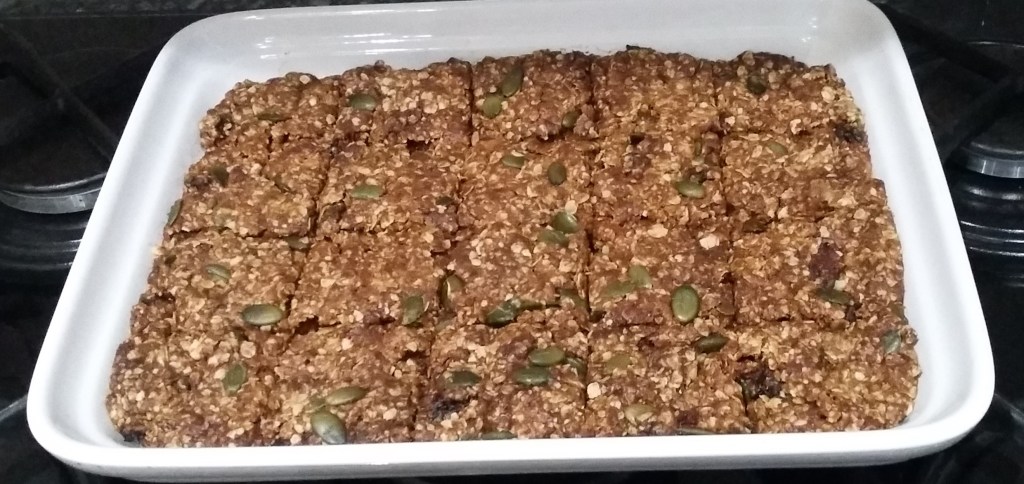
Flapjacks

Our family’s recipe for nubbly, chewy, crunchy flapjacks. Endlessly adaptable, brilliant to make with children.

  • 115g butter
  • 1 tbsp golden syrup
  • 1 level tsp bicarbonate of soda
  • 90g porridge oats
  • 60g plain flour
  • 80g soft brown sugar
  • A couple of handfuls of chopped dried fruit, seeds, nuts, desiccated coconut. (You can use anything dried. Our family faves are raisins with pumpkin seeds and sunflower seeds; dried cherries with flaked almonds; and dried pineapple with flax seeds and desiccated coconut. You could even add chocolate chips and banana chips, which is how my dad likes them, but I feel as though they suddenly become not breakfast-appropriate if you do that!)
  1. Preheat oven to 140C fan (160C)
  2. In a big bowl, mix together oats, flour, sugar and your choice of fruit/seeds
  3. Melt the butter in a small pan on the hob, then add the syrup and stir together
  4. When combined, take off the stove and add the bicarb. Stir until frothy and then pour over the dry ingredients
  5. Mix well until everything turns flapjack-coloured
  6. Tip into a baking tin or dish – I usually use a rectangular ceramic dish so I don’t have to line it. Press down with your fingers into all the corners
  7. Cook for 30 mins until golden brown
  8. Remove from oven, cut into squares with a sharp knife but leave in the tin until completely cooled
  9. Store in an airtight container

Roast chicken

So simple, so utterly delicious. Stick a raw chicken in the oven and a short time later you’ve got a roast chicken! Crispy skin, succulent meat. Best dinner ever.

  • 1 whole chicken, around 1.5kg
  • 1 onion
  • Half a lemon
  • 2-3 tbsp/approx 30g salted butter
  • Salt and pepper
  1. Pre-heat the oven to 220C fan (240C)
  2. If the chicken is tied up, untie the string or elastic from around it. Put it into a roasting tin that fits snugly
  3. Leaving the root end intact, cut the onion in half. Cut one half into half again. Cut the other half into 6 wedges
  4. Cut any large pieces of hard fat off the inside edge of the chicken. Then put 2 quarters of onion and the half lemon inside the chicken
  5. On each side of the chicken, ease the skin away from the breast at both ends and push butter under the skin
  6. Season the chicken well and put into the hot oven
  7. After 15 mins, take the chicken out, baste it and turn the oven down to 170C fan (190C)
  8. Cook the chicken for a further hour, basting every 15 mins or so. When there’s 30 mins to go, add the onion wedges to the roasting tin
  9. When it’s cooked through, take it out of the tin, tip out any juice inside and place on a serving dish. Allow to rest for 10 mins
  10. Pour the cooking juices and fat into a small glass. Use the baster to remove the cooking juices from underneath the fat, to make gravy with or just serve with the chicken. Some juice will come off the resting chicken – this can be added too.

Serve with roast potatoes and all the trimmings. Or in a roast chicken sandwich with mustard mayo and rocket. Use the carcass to make stock

Beef and red wine stew

A testament to the power of low heat and time. It starts as an unprepossessing combination of chunks of stuff floating in red wine and stock. Ends as a bowl of rich, warm, comfort food. Eat it with dumplings, eat it with mashed potatoes or just dunk bits of crusty bread in it.

  • 500g stewing beef (I like beef shin, but it works with any stewng cut except that extra-lean stuff)
  • 3 tbsp flour, mixed with salt, pepper, a sprinkle of paprika and garlic powder
  • 1 tbsp butter
  • 3 tbsp veg oil
  • 1 onion, finely chopped
  • 1 carrot, finely chopped
  • 1 stick celery, finely chopped
  • 1 clove garlic, minced
  • 2 tbsp tomato puree
  • 300ml red wine
  • 1 beef stock cube
  • 1 bay leaf
  • 1 stalk of fresh thyme
  • Salt & pepper
  • Additions such as whole peeled shallots, trimmed chantenay carrots, button mushrooms
  1. Cut the beef into chunky cubes and dredge in the seasoned flour
  2. Melt the butter and 1 tbsp oil in a lidded casserole over a medium heat
  3. Brown the beef (in batches) in the hot oil, removing it into a bowl afterwards
  4. Turn the heat down and, into the empty pan, add 2 tbsp oil and the garlic, onion, carrot and celery
  5. Cook for 5 mins until softened, then add the crumbled stock cube and tomato puree
  6. Stir in and cook for a further couple of mins
  7. Add the red wine, turn the heat up and bring to the boil, stirring and scraping to get all the brown bits off the bottom of the pan
  8. Boil for 2 mins and then add the beef, herbs, seasoning and enough boiling water to cover everything
  9. Put the lid on and cook over the lowest possible heat on the stovetop, or in the oven at 140C fan (160C)
  10. Cook for 1½ hours, stirring occasionally to make sure it doesn’t catch on the bottom
  11. Add the additional veg and cook for a further 40 mins

If cooking dumplings in the stew, add them with the extra veg

If you want to make this into a pie, leave it to cool and use ready-rolled shortcrust pastry to line a pie dish. Fill with stew, seal the pastry lid and brush with egg wash. Make a small hole in the pastry lid to let the steam out and bake at 180C fan (200C) for 30-40 mins until golden brown and crunchy.

Pickled green tomatoes

We had a glut of unripened cherry tomatoes last summer, and I hate throwing anything away. This recipe makes 1 large jar of poky, sweet/sour, more-ish pickles. Pretty and delightfully lime green in colour, I highly recommend these with any cold meat or strong cheese.

Just as a note, these are not the sort of pickles that keep for years – they need to be stored in the fridge and eaten within a month or so.

  • 400-500g green tomatoes, cut into wedges or halved if small or left whole if tiny
  • 3 garlic cloves, peeled
  • 250ml white wine vinegar
  • 250ml water
  • 1 tsp dried dill
  • ½ tbsp black peppercorns
  • ½ tsp turmeric
  • 3 tbsp white sugar
  • 2 tbsp salt
  1. Wash the jar and its lid in hot soapy water, then rinse and allow to air dry. Or microwave the jar with an inch of water in the bottom of it for 3 mins on full power. Then pour out the water and leave to dry.
  2. Pack the tomatoes into the warm jar
  3. In a small saucepan, combine all the remaining ingredients and bring to a low boil, stirring occasionally to dissolve the sugar and salt.
  4. Pour the hot brine into the jar over the tomatoes
  5. Tap the jar on the counter to release any air bubbles
  6. Discard any remaining brine (or use to pickle something else!) or top up the jar with extra water if any tomatoes are sticking out
  7. Screw on the lid tightly and allow to cool to room temperature. Shake the jar to make sure all the contents are evenly distributed and put into the fridge
  8. Ready to eat after a week

Milena’s vanilla kipfel

My Czech granny’s recipe for vanilkove rohlicky. Melt-in-the-mouth, crumbly vanilla-scented crescents, traditionally made for Christmas. Our family celebration isn’t complete without a selection of little biscuits or pecivo.

The recipe is so simple, it’s a bit intimidating – the original directions simply said to “mix ingredients” and then to “bake”. That was it. I’ve included a bit more detail

  • 200g plain flour
  • 150g unsalted butter
  • 100g ground unblanched almonds (suggest grinding them yourself if you can. You could also use hazelnuts or walnuts)
  • 50g caster sugar
  • Vanilla icing sugar for finishing
  1. Pre-heat oven to 150C fan and grease or line baking tray
  2. Mix ingredients. It will feel as though the mixure is too dry and it won’t come together. Don’t be tempted to add liquid, it will happen!
  3. Make into crescents. Traditionally approx 5cm long. Don’t use too much dough, these are quite small. Roll between your fingers to made a slightly tapered sausage, and then curve round into a crescent shape
  4. Place on baking tray and bake for around 20 mins until slightly golden. Don’t over-cook
  5. Shake in vanilla icing sugar (or sift over) whilst still warm and then leave on a rack to cool
  6. Store in an airtight tin with any leftover icing sugar

If you don’t have vanilla icing sugar, you can make some in advance by putting used vanilla pods into icing sugar and leaving for 2 weeks, shaking periodically. Or if you’re not organised enough (I’m not), you can just add 1 tsp of vanilla extract to the dough mixture.

You can also make vanilla extract by sinking used vanilla pods into a bottle of vodka (around 4 pods to 200ml alcohol), and I always add a couple of tbsp sugar too. It should be ready to use in a few weeks, but will get stronger the longer you leave it. A higher proportion of vodka will result in some absolutely delicious vanilla vodka, rather than vanilla extract.

Saag paneer

Brilliant dish as part of an Indian feast with friends, or just sitting on the sofa in pjs, watching Queens Gambit and eating a bowl of it on its own. It’s the power of squeaky cheese. This is enough for 2 if you’re not having anything else with it. And for 4 as a side dish.

  • 2 tbsp veg oil
  • 220g firm paneer, cut into small cubes
  • 1 onion, finely chopped
  • 2 cloves garlic, minced
  • 3 cm piece of ginger, grated/minced (highly recommend a microplane grater for this!)
  • 1 tsp cumin seeds
  • 2 tsp garam masala
  • ½ tsp turmeric
  • 2 tomatoes, diced
  • 300g spinach, washed and roughly chopped
  • 50ml single cream
  • ½ tsp salt
  1. Heat 1 tbsp oil in a deep frying pan, pop in the paneer and fry until golden. Then remove from the pan
  2. Add the other tbsp oil and the cumin seeds. Fry for 1 min until you can smell them, then add the onion
  3. Cook, stirring occasionally, for about 5-8 mins until the onion is golden and completely soft
  4. Stir in the garlic and ginger, cook for 1 min and then add the garam masala and turmeric. Season with salt
  5. Add the tomato to the pan and stir everything together. Cook with the lid on for 10 mins, stirring occasionally and adding a small amount of water if it’s starting to catch
  6. Put the spinach in the pan and carefully stir into the mixture – you might have to do this in stages
  7. Once spinach is wilted, pour in the cream, a splash of boiling water and the paneer cubes and combine
  8. Heat until bubbling and serve straight away

Quick chocolate cake

Our family’s birthday cake recipe. It’s quick, incredibly easy and makes a cake that is moist, chocolatey and satisfying without being heavy or overly rich. It also doesn’t involve creaming butter and sugar which is a huge point in its favour for me! I’ve given this recipe out probably more than any other.

  • 60g dark chocolate
  • 110g unsalted butter
  • 200g caster sugar
  • 125ml milk
  • 120g plain flour
  • 2 tsp baking powder
  • 2 eggs
  • 1 tsp vanilla essence
  1. Pre-heat oven to 170C fan (190C)
  2. Grease and line 2 identical baking tins (or 1 big one if you don’t want to make a sandwich cake)
  3. Melt together the chocolate and butter. I used to use a bain marie, now I just melt in the microwave – 40 seconds at a time, stir and check
  4. Pour the melted chocolate and butter into a mixing bowl
  5. Beat in the sugar, milk, eggs and vanilla
  6. Tip in the flour and baking powder, and a pinch of salt
  7. Mix until just combined – don’t over-beat it
  8. Pour (yes, it’s that liquid, don’t worry) into the lined tins and bake for 25-30 mins until well risen and cooked through. If cooking in 1 tin, bake for about 10 mins longer)

You can also use the same recipe to fill cupcake cases and cook for just 15 mins. Or 4 times the recipes fills a deep roasting tin, which will need about 40 mins but makes an excellent option for large numbers.

Ice once cool with the chocolate glaze below. It’s the best chocolate icing ever. And no clouds of icing sugar to contend with. This quantity will ice the cake above, with enough to sandwich between the 2 cakes as well as coating the top and sides.

  • 3 tbsp milk
  • 3 tbsp caster sugar
  • 30g unsalted butter
  • 85g dark chocolate
  • A drop of veg oil
  1. Break the chocolate into a bowl and add the other ingredients. You won’t believe it will turn into a beautiful, glossy, smooth icing, but trust me, it will.
  2. Melt together in a bowl over some hot water or in short bursts in the microwave. It will look terrible until it suddenly doesn’t
  3. Once the icing has cooled slightly, use a spoon to spread over the top and sides of the cake. Top with chocolate sprinkles/maltesers/candles. The cooled icing will set so it’s not crunchy but will hold its shape.

Beef gyudon

Intensely savoury, wonderfully comforting. Feeds 4

  • 500g steak
  • 2 tbsp oil
  • 4 small onions, finely sliced into half moons
  • 2cm ginger, peeled and finely julienned
  • 100ml soy sauce
  • 100ml mirin
  • 50g dark brown sugar
  • 150ml beef stock
  • To serve, sliced spring onion, pickled ginger, toasted sesame seeds
  1. Slice the beef against the grain into very thin pieces, approx ½ cm thick. Remove any hard fat or sinew
  2. Heat the oil in a large frying pan and add the onions
  3. Cook over medium flame, stirring occasionally until they are completely soft and brown. This takes at least 10 mins
  4. Add the fresh ginger, stir in and cook for a further 2 mins
  5. Add the soy, mirin, sugar and stock. Cook for around 10 mins until the sauce is reduced to a syrupy consistency
  6. Stir the beef into the sauce and cook for just a couple of mins, until the beef is no longer pink on the outside
  7. Serve straight away on top of white rice, sprinkled with sliced spring onion, toasted sesame seeds and pickled garlic. Eat with a spoon